
The CBI has registered a case against Basanta Kumar Das, former director of the ICAR-Central Inland Fisheries Research Institute, for allegedly diverting over Rs 27 lakh in government funds to his family members and others. The FIR states that these diversions caused wrongful loss to the exchequer.

IIT Hyderabad and Japan's Mie University have signed MoUs to foster academic exchanges and joint research, with a strong focus on semiconductors and digital technologies. This collaboration aims to develop skilled talent and strengthen the semiconductor ecosystem in both countries.
IIT Bhubaneswar and IIT (Indian School of Mines) Dhanbad have signed a Memorandum of Understanding to enhance research collaboration and academic interactions, particularly in semiconductor and basic sciences. The agreement facilitates joint research projects, doctoral student supervision, faculty and student exchanges, and shared experimental resources, aiming to advance knowledge and create lasting impact.
Noted scientist Prof V Ramgopal Rao highlights India's significant progress in higher education and research but points out a critical gap in converting scientific discoveries into market-ready technologies. He advocates for a robust institutional framework, multidisciplinary collaboration, and stronger academia-industry ties to foster innovation and translate research into practical products.

Students who want to gain hands-on research experience at the IIT Bombay can apply for the IITB Research Internship Award 2026.
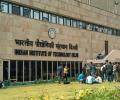
Researchers at IIT Delhi have successfully demonstrated the simultaneous transmission of quantum-entangled photons and classical data over a 50-km optical fibre link. This breakthrough addresses key challenges in integrating fragile quantum signals with existing telecommunications infrastructure, paving the way for more scalable and secure future quantum networks.

Researchers have discovered a method to externally manipulate a cell's automatic waste clearance process, known as autophagy. This breakthrough, involving the protein LC3, could offer new therapeutic targets for diseases like cancer and Parkinson's, where cellular cleansing mechanisms are often impaired.
Banaras Hindu University (BHU) has received approximately Rs 15 crore in funding from the Indian Council of Medical Research (ICMR) for six biomedical research projects. These projects aim to address critical national health priorities, including cancer detection, antimicrobial resistance, and pediatric septic shock, fostering advanced research and improving patient care.
Researchers from IIT Guwahati and BHU have devised an eco-friendly biological method to treat textile wastewater, specifically targeting toxic azo dyes. Their novel bacterium, 'Brevundimonas sp. AJZ05', effectively degrades 98.50 per cent of Direct Blue-6 dye, producing non-toxic byproducts, offering a sustainable alternative to conventional chemical treatments.

Six faculty members from IIT Madras have been awarded the prestigious ANRF J C Bose Grant, recognising their outstanding research contributions in engineering and science. The highly competitive grant provides Rs 25 lakh annually for five years to support frontier research.
Dr Komal Verma Saluja, a final-year student at Government Medical College Kota (GMCK), has been awarded the "Researcher of the Year Award 2026" by the India chapter of the American College of Physicians (ACP). She is the youngest and first medical student to receive this prestigious accolade. Saluja's research includes identifying an imaging biomarker for early cognitive decline in type 2 diabetes and developing a diagnostic method for fatty liver disease using echocardiography. Her achievements have brought pride to GMCK and highlight the need for more novel diagnostic and therapeutic research in India.

A laboratory technician in Siberia died from 'pneumonia of unknown aetiology' at an Anti-Plague Research Institute, sparking fears of pneumonic plague, with the US now monitoring the situation and urging Russia for transparency.
West Bengal has launched an Emerging Quantum and Semiconductor Technologies (EQST) section at CSIR-CGCRI to attract investments and position the state as a hub for next-generation technology. Minister Kalyan Chakraborti highlighted India's need to invest in these crucial sectors and outlined the state's plans to collaborate with institutions and leverage budget initiatives to foster research and start-ups.
Human skeletal remains from the ancient Indus-Saraswati Civilisation site of Rakhigarhi in Haryana have been formally transferred by the Archaeological Survey of India (ASI) to the Anthropological Survey of India (AnSI) for detailed scientific investigation. This transfer, under a new MoU, aims to advance multidisciplinary research into one of the largest known settlements of the Indus-Saraswati Civilisation, with archaeologists having uncovered eight burials, including three complete skeletons, during recent excavations.
The University of Melbourne and the Indian Institute of Science Education and Research (IISER) Tirupati have launched a new 2+2 Bachelor of Science Integrated (Honours) dual degree. This programme offers Indian students a globally connected, research-intensive science education, allowing them to study two years at IISER-Tirupati and two years in Melbourne, graduating with two honours degrees.
A new study by the Leibniz Institute for Food Systems Biology reveals that higher atmospheric carbon dioxide levels significantly alter the protein composition of wheat. This change impacts baking quality and the tolerability of wheat products, with increased amylase/trypsin-inhibitors and decreased gluten proteins observed under elevated CO2 conditions. Researchers emphasise the need for crop adaptation focusing on quality characteristics.
Researchers from IIT Bhubaneswar and Virginia Commonwealth University have theoretically predicted a new two-dimensional material, a FeCl3 monolayer, exhibiting i-wave altermagnetism. This discovery holds significant potential for developing faster, more compact, and energy-efficient electronic devices, including applications in high-density memory, spintronics, and quantum technologies.
The world's largest steel maker, Mittal Steel Company, has made a long-term commitment to China by setting up a research institute for metals in central Hunan province.

India has requested an update from Russian authorities regarding 69 Indian nationals reportedly serving in the Russian Army. The External Affairs Ministry spokesperson stated that 139 Indians have been discharged so far, but 51 have died. India continues to warn its citizens against joining the Russian military due to significant dangers.

India's Agriculture Secretary Atish Chandra has warned that the upcoming rabi (winter) crop season is likely to be challenging for rainfed areas due to the strengthening El Nio weather pattern, potentially affecting foodgrain production. This comes as Maharashtra declares drought in nearly 74 per cent of its talukas, highlighting the immediate impact of climate change.
Researchers at NIT Rourkela have developed a novel material from discarded jackfruit peels, capable of removing over 90% of fluoride from contaminated water in about 10 minutes under laboratory conditions. This patented technology, which uses activated carbon modified with zirconium, offers a promising, cost-effective, and sustainable solution for decentralised water treatment, particularly in fluoride-affected regions of India.

The World Health Organisation (WHO) has confirmed that Russian authorities reported no recent plague cases in Irkutsk oblast following the death of a laboratory worker from severe pneumonia. Initial media reports had suggested pneumonic plague, but investigations found no high-threat pathogens among contacts, and the cause of death is still being clarified by WHO.
Majority of India's scientific and research institutions are stagnant and on 'life support systems' due to lack of vigorous faculty recruitment and insufficient funding, a top scientist rues.

Indian equity benchmarks Sensex and Nifty rallied up to 1 per cent in early trade, driven by strong performance in IT stocks, Reliance Industries, and favourable global market sentiment, rebounding from previous losses.

The Indian rupee depreciated by 43 paise to close at 94.81 against the US dollar, influenced by a negative trend in domestic equity markets, surging crude oil prices, and significant foreign institutional investor outflows.

A new study challenges the common belief that menopause is a gradual process, revealing that the female body undergoes abrupt, "physiological cliff"-like changes in various health measures around the time of the last menstrual period. These shifts, observed in over one million women, begin more than a decade before menopause, offering a new window for preventive care.

Indian equity benchmarks Sensex and Nifty extended their losses for a third consecutive session, with the Sensex declining 460.30 points and the Nifty dropping 123.70 points, primarily due to surging crude oil prices driven by escalating tensions in West Asia and weak global cues.

Dedicated Ayush dispensaries increased from 26,130 in 2013-2014 to 37,804 in 2024-2025, while hospitals rose much more slowly, from 3,605 to 3,885.

Indian equity benchmark indices extended losses for a second consecutive session, with the Sensex dropping 143 points, driven by a sell-off in power, banking, and financial stocks, coupled with elevated crude oil prices and persistent FII selling.
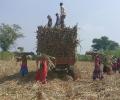
A supervisor at a sugarcane research institute in Shahjahanpur, Uttar Pradesh, has alleged that he was abducted and assaulted by a group of men due to a family dispute. Police have registered an FIR and are investigating the incident after a video surfaced on social media.

Tata Trusts, India's largest philanthropic group, disbursed Rs 1,556.31 crore in the year to March 2026 and announced plans to establish a network of 40 to 50 not-for-profit general hospitals, with funding from paying patients supporting care for those who cannot afford it.

Atomic Energy Commission chairman Ajit Kumar Mohanty stated that India is on the verge of a significant technological transformation, driven by advancements in AI, quantum technologies, and other fields. Speaking at BIT Mesra's convocation, he emphasised the need for strong indigenous capabilities, skilled professionals, and interdisciplinary collaboration to achieve a developed India. Other speakers, including BIT Mesra's Chancellor and Vice Chancellor, echoed the importance of continuous learning and contributing to national progress.
A mob, protesting against a book on Chhatrapati Shivaji by a foreign author, on Monday stormed the Bhandarkar Research Institute in Pune and damaged several rare books, manuscripts and furniture.
Four faculty members from Nagaland University have been named among the world's top 2 per cent scientists for their significant research contributions, according to an annual database by Elsevier and Stanford University. Three of them also feature in the Career-Long Top 2 per cent Scientists list, highlighting the university's growing global research impact across various scientific disciplines.

Researchers at the Indian Institute of Technology (IIT), Guwahati, have developed an innovative nature-based wastewater treatment system utilising taro plants and an engineered "zig-zag flow" design. This low-energy, compact technology offers a promising solution for treating highly polluted swine wastewater in decentralised livestock farms, particularly in rural and resource-limited regions.

Indian IT stocks have experienced their most significant weekly surge in 18 years, with the Nifty IT index climbing 11.72 per cent, as a global sell-off in AI-linked equities redirected investor attention towards India's IT services sector. This shift aligns with a JP Morgan report identifying India as a 'natural AI hedge' due to its large, liquid market and strong domestic institutional investor base.

Karl Deisseroth, Peter Hegemann, and Georg Nagel have been jointly awarded the 2026 Nobel Prize in Physiology or Medicine for their groundbreaking discoveries in light-gated ion channels and optogenetics, a method revolutionising the study of brain function.
Researchers at IIT Kharagpur, in collaboration with the University of Illinois Urbana-Champaign, have developed a highly sensitive sensor technology. This innovation allows ordinary smartphone cameras to detect extremely tiny, invisible objects, potentially leading to low-cost, portable medical testing and other applications requiring the detection of minute substances.

Researchers at IIT Kanpur have found that 20 per cent ethanol-blended petrol (E20) does not significantly reduce fuel efficiency or harm vehicle engines, contradicting social media claims and providing reassurance amidst its nationwide rollout. The study supports the Oil Ministry's stance on E20's benefits.

An IIT Madras study reveals that financial cybercrime victims in India are often highly educated professionals, challenging the notion that only careless or financially unaware individuals are targeted. The research highlights that digital literacy doesn't guarantee protection, as fraudsters exploit stress and emotional vulnerabilities.
